

Sarracenia x “Sanguinea Nivalis” DFH130
Medium plant Size Guide
45.00€ *
Out of stock
 Currently Dormant
 Bred by Diflora
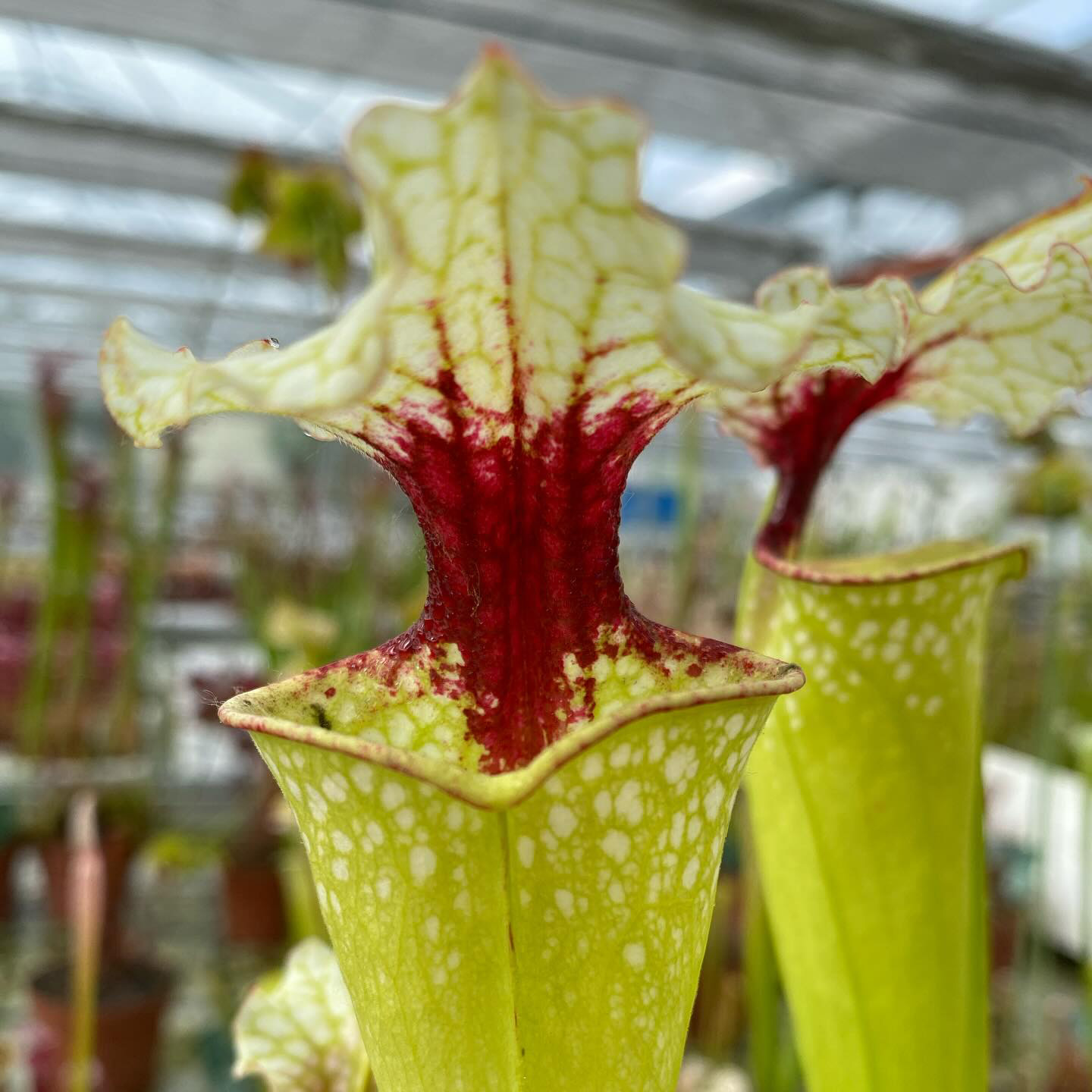
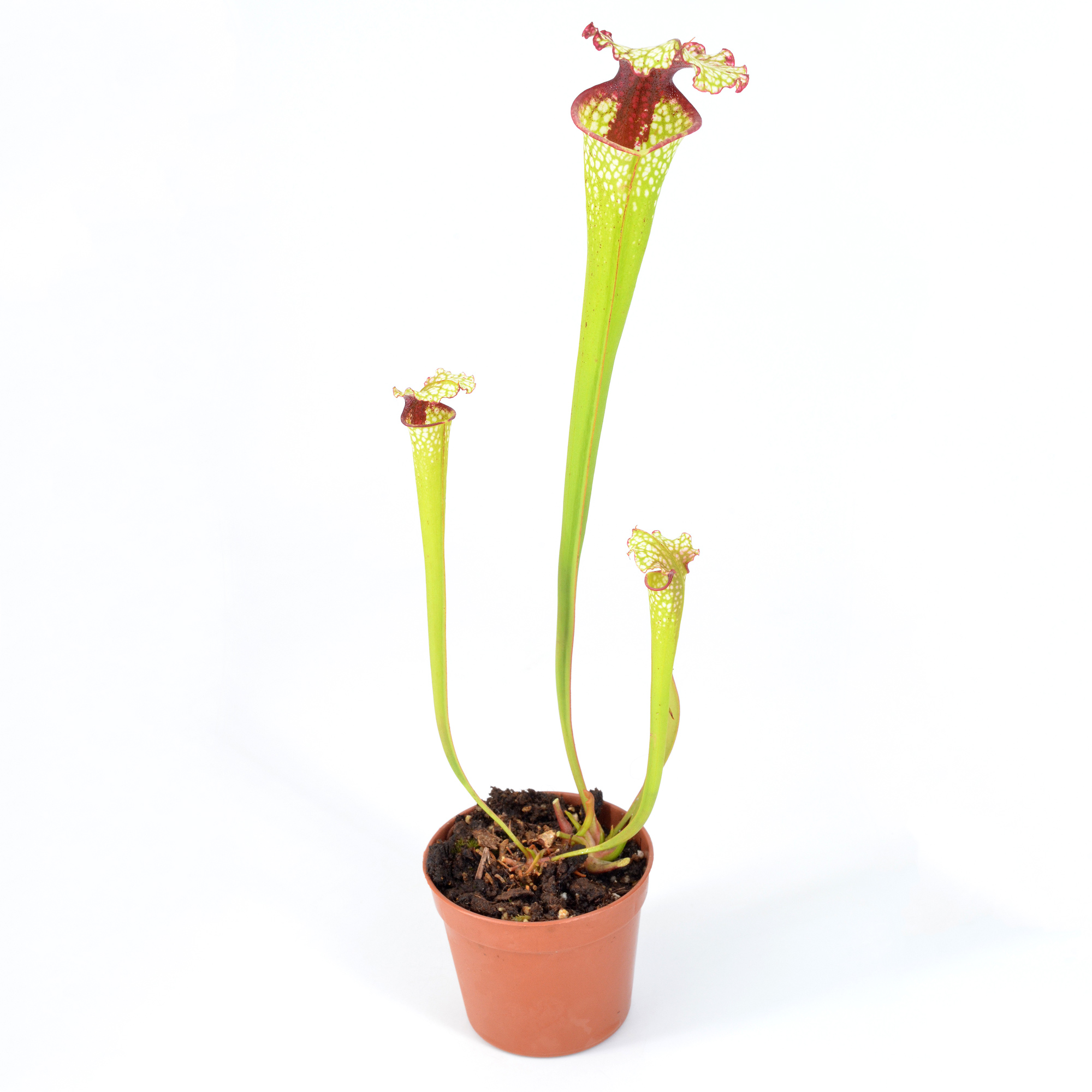
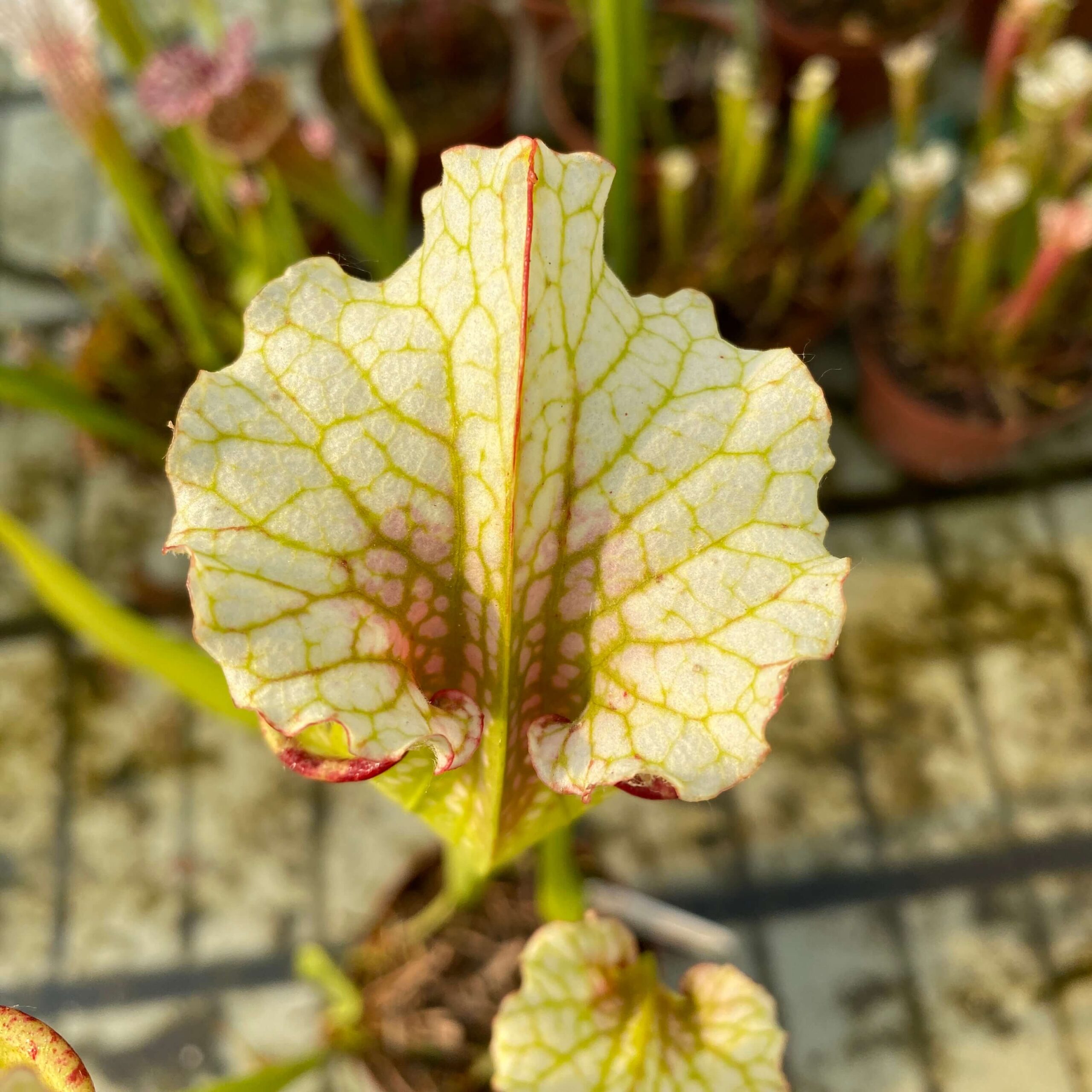
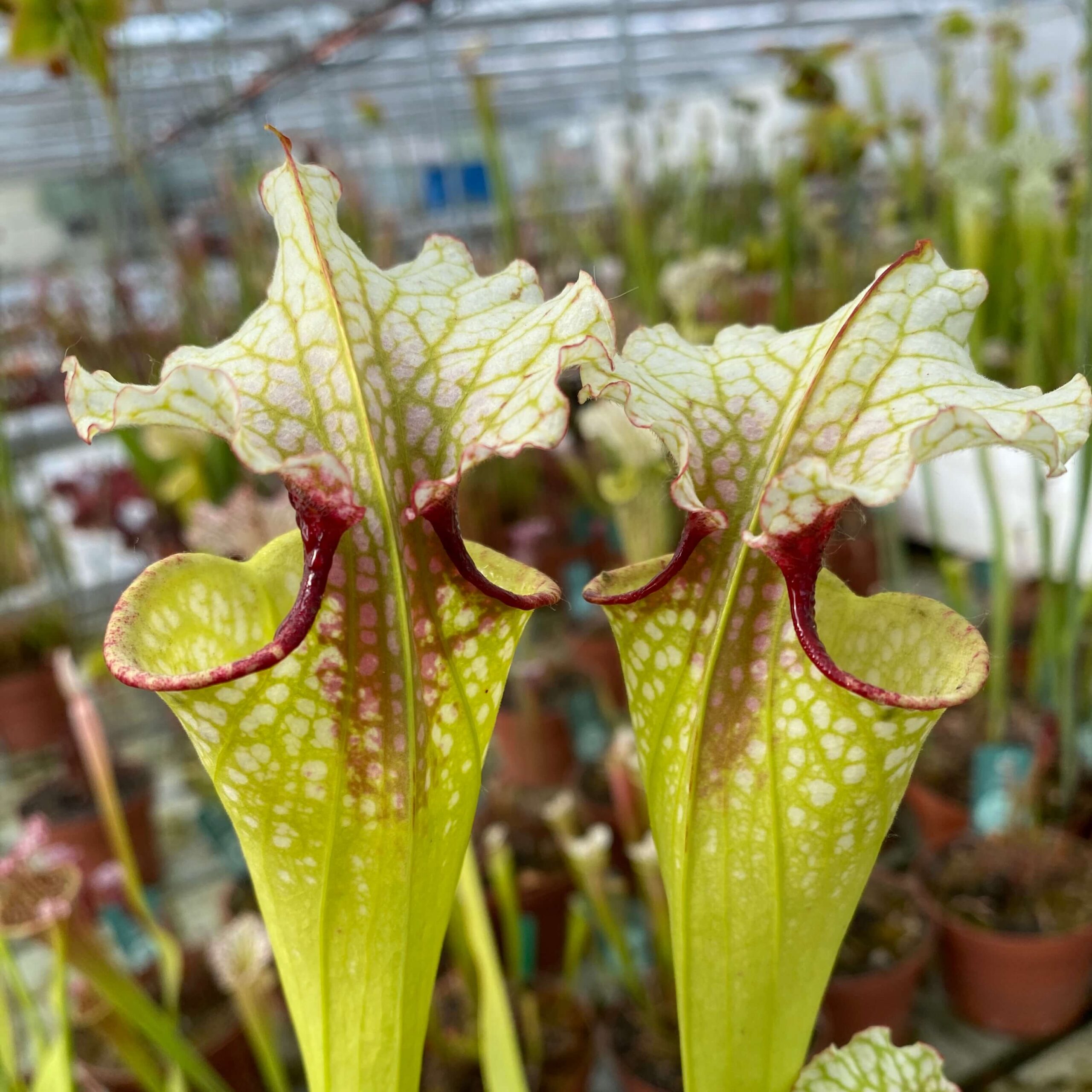
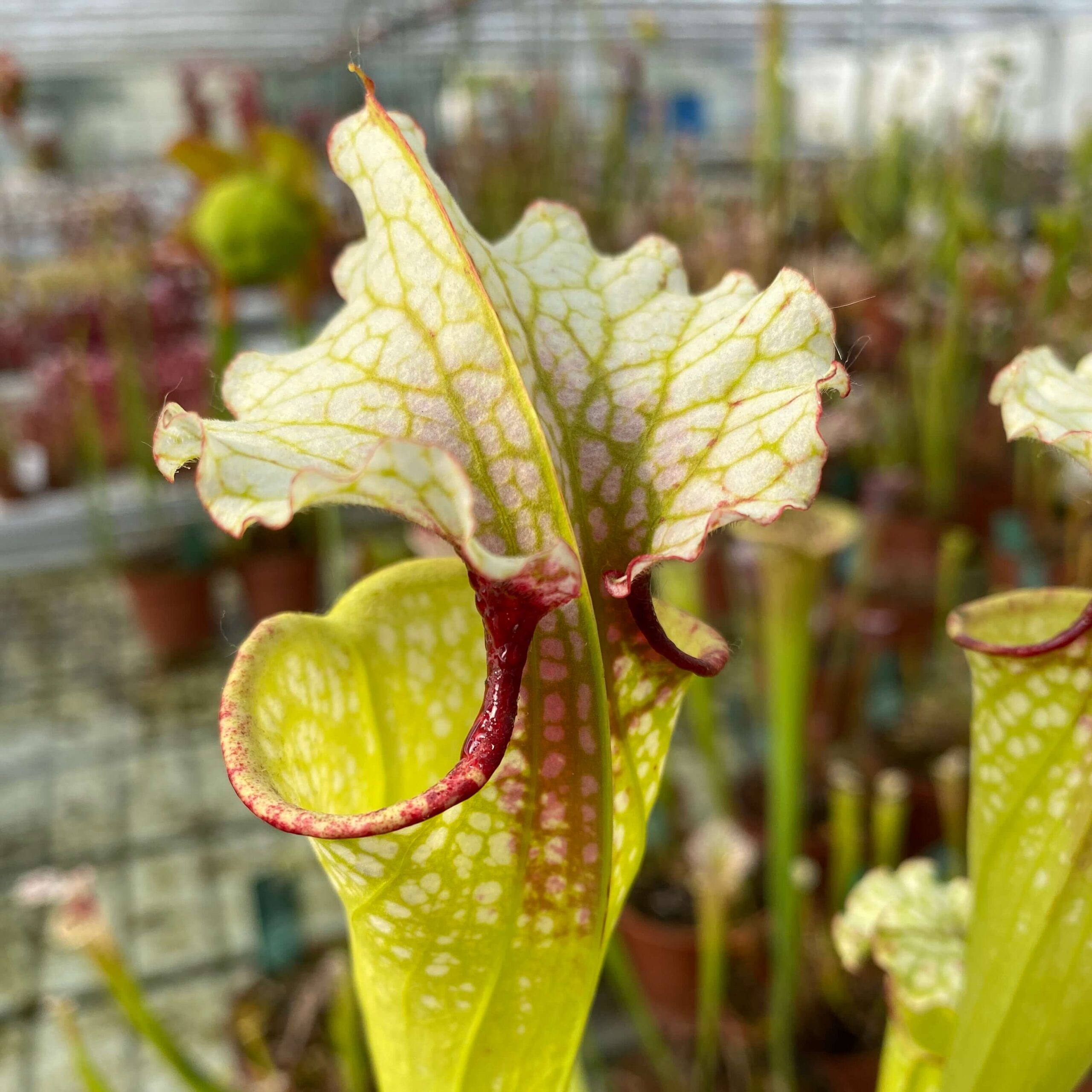
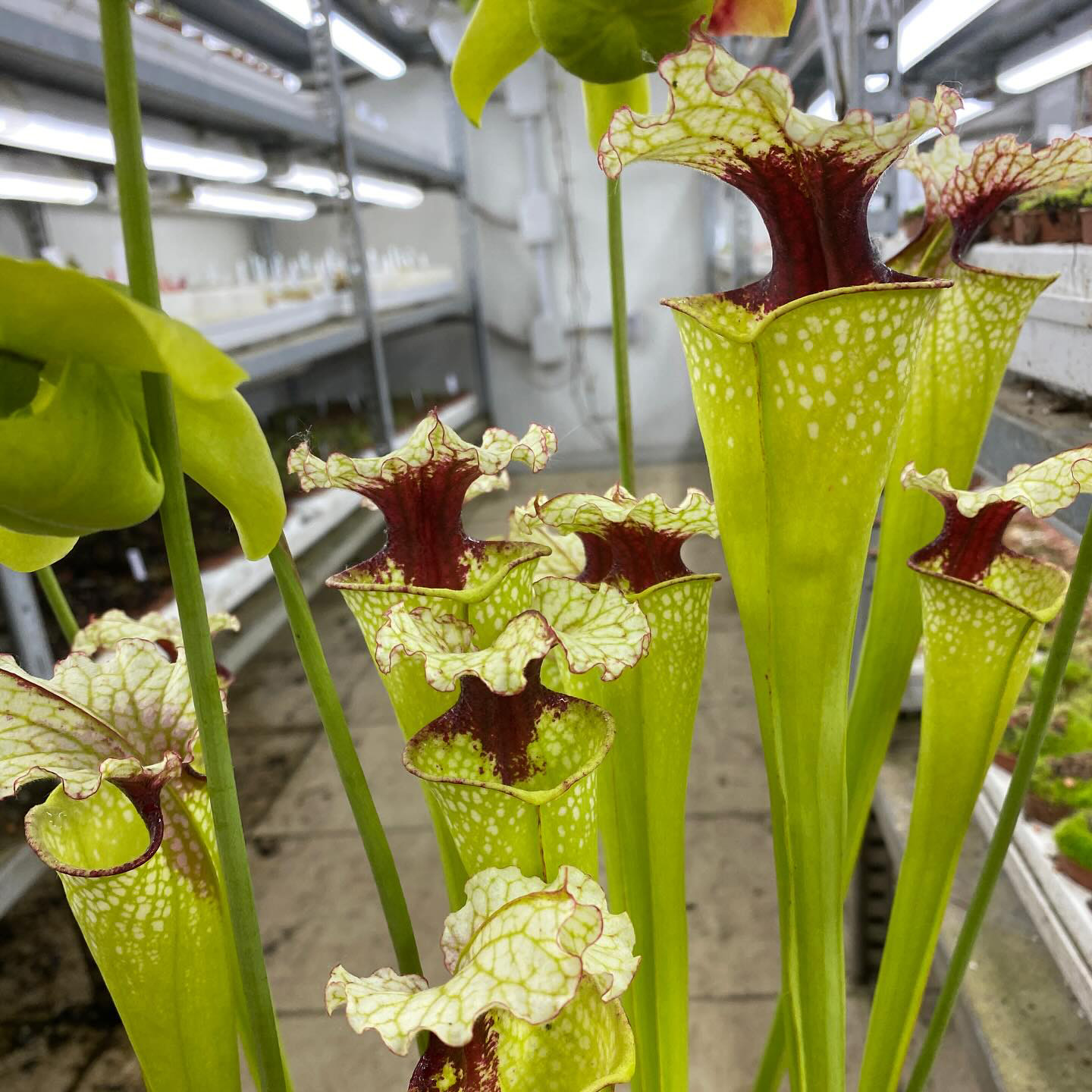
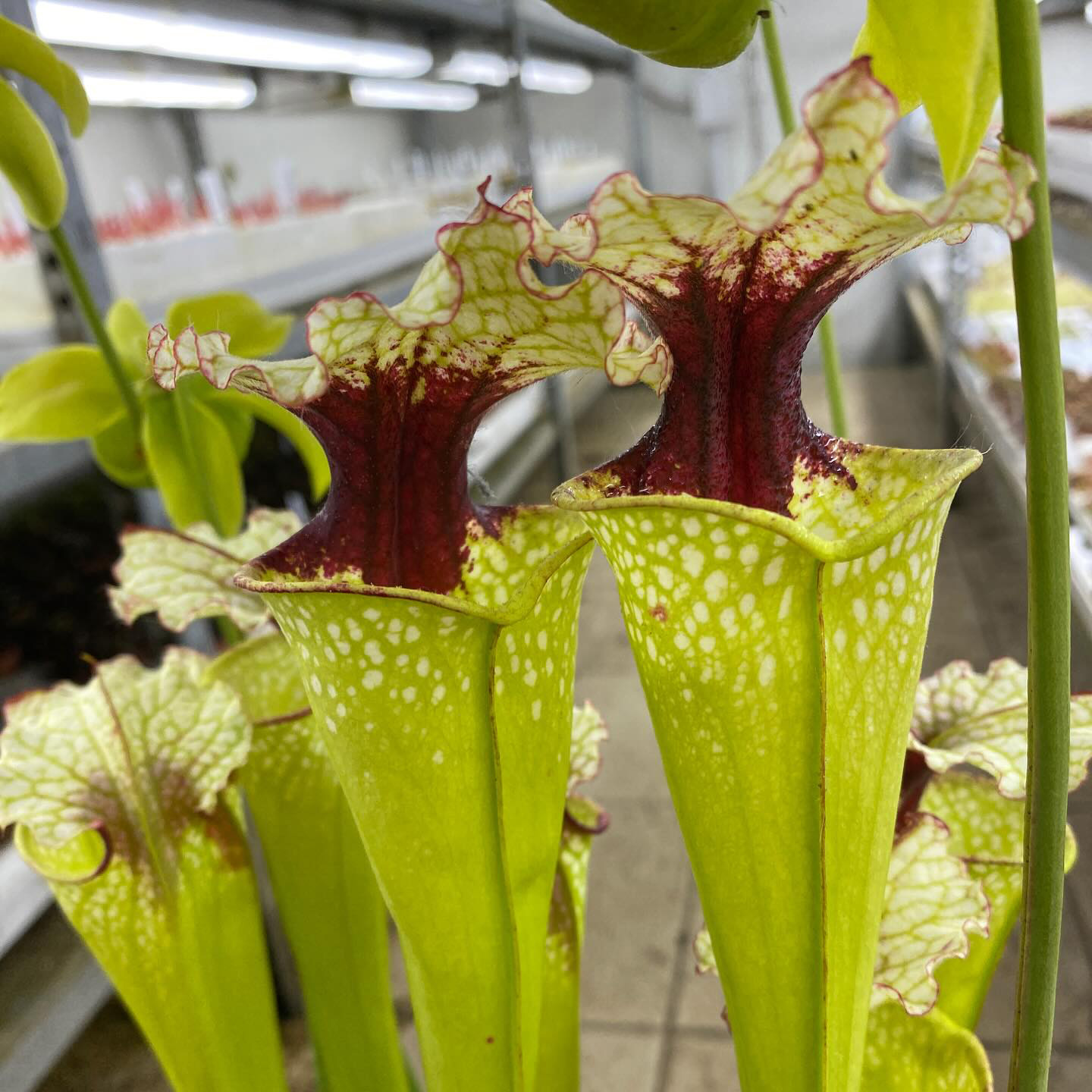
Sarracenia x “Sanguinea Nivalis” DFH130 is our hybrid number #7, from ‘Leah Wilkerson’ [Walton County Florida] H112 MK x [Conecuh, Covington County, Alabama] SXM54 AC. This stands out as a truly remarkable hybrid due to the sharp chromatic contrast that defines it. Its coloration is elegant: the pitcher exhibits a uniform light green up to the trap edge, adorned with white, polka-dot-like areolae. The operculum is almost entirely white with thin green venation. In striking contrast, the wide throat opens to reveal an intense red color that darkens to almost black in spring. The peristome is slender and green, delicately dappled with red, completing the vibrant interplay of colors. The pitcher features a pronounced conical shape and a wide mouth, topped by a broad operculum with a sinuous margin. A truly beautiful specimen!
Origin:
North America
Product Features:
- Climate: temperate/continental
- Life-cycle: perennial (Winter dormancy)
- Ascidium: Uniform light green with white areolae resembling polka dots
- Peristom: slender and green, delicately dotted with red.
- Operculum: predominantly white, featuring fine green veins running through it
Additional info:
For more info & photos visit our blog and our page Facebook and Instagram.
Scope of delivery
- Vigorous plants, repotted in the current season, in high-quality soil
- Brick-coloured pot made of recycled plastic (6.5 cm diameter)
- Care guides
- Free access to our plant doctor care service
Care instructions
How we grow Sarracenia?
In-vitro plants are acclimated in a Grow Chamber with controlled temperatures and humidity. This indoor setup ensure an easy adaptation to extra-vitro condition, guaranteeing the best conditions for plants in this delicate stage. All plants in the Diflora shop have been acclimated for a minimum of 3 months. After this initial step, the plants are moved outdoors, exposed to direct sunlight, and watered using the classic tray system, ensuring a consistent water level in the tray. Like most carnivorous plants, we use distilled water produced by our reverse osmosis system.
Lighting:
Full sun all year round! It is possible to shade slightly in the warmer summer months to avoid excessive temperatures that may stunt the plant’s growth. Sarracenia is, however, less sensitive to heat than Dionaea muscipula.
Watering:
Sarracenia likes stagnant water (3-4 cm of distilled water always in the saucer) even in winter and if it freezes. This serves to faithfully imitate the natural environment in which they live.
It is important to use only distilled water or alternatively all waters that have an extremely low mineral salt content. For example all condensation water (air conditioner, dehumidifier). The conductivity of the water must have a value of less than 50 micro-siemens.
Substrate:
Sarracenia does not tolerate nutrients. We avoid peats with neutral pH or nitrogen fertilisers, which are often found in potting soils for acidophilic plants. The peat must be pure, the Sarracenia substrate we recommend is 50% pure acid sphagnum peat and 50% perlite.
Seasonaly and temperature:
Sarracenia is a carnivorous plant from temperate climate, it’s grown outside all year long, under direct sunlight both in winter and in summer. The plant starts to sprout out from late March, early April and continue to grow until late October when the cold temperature become more and more strong. In late autumn the ascidia start to dry up. Sarracenia in fact stores energy in an underground stem called the rhizome, which is white in colour, and lets the aerial part die with the arrival of cold weather. Do not be alarmed the plant is fine and should be hydrated with a few cm of distilled water in the saucer as usual, in the same outdoor summer location. In spring, as temperatures rise and the hours of light increase, the traps will spring back and the plant will start to vegetate again.
Additional info:
For more cultivation information visit our care guides or use our plant care support by writing to ilpigliamosche@diflora.it
Source
Self-grown seeds were germinated in-vitro in 2018 and then selected by observing the distinct characteristics displayed by the plants post-acclimatization. Each seed was isolated, numbered, and preserved for genetic purposes.
Trapping technique
To attract prey Sarracenia releases sweet substances on the edge of the pitcher. This essence attracts insects and they fall on the inside of the trap. Inside of it plant produce digestive enzyme. Escape from the pitcher is almost impossible. The inside has smooth walls and hairs facing down that stop preys.
| Cultivation | |
|---|---|
| Best Season | |
| Lighting Conditions | |
| Sarracenia – Species & Cultivar | |
| Sarracenia – Special Features |